
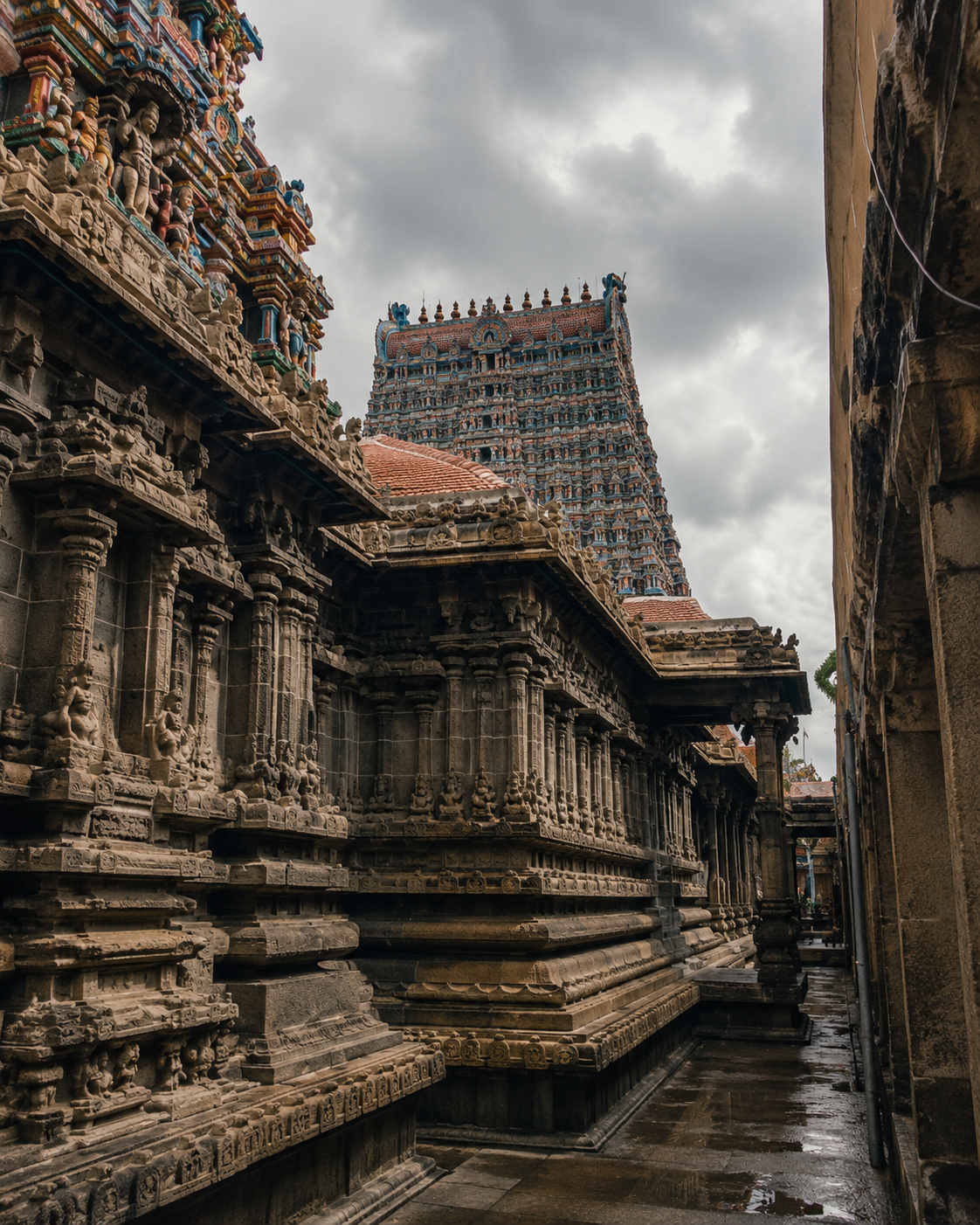
The Divine Specialities of the Kasi Viswanathar Temple, Tenkasi: Why This “Kashi of the South” is Unique
Welcome to the definitive guide on the specialities of the Kasi Viswanathar Temple in Tenkasi. This sacred site is not just another temple; it is a living tapestry of divine legend, architectural genius, and unique spiritual phenomena that make it a must-visit destination for pilgrims and travellers alike. Let’s explore what makes this temple so extraordinary.
The Foremost Speciality: The “Kashi of the South”
The temple’s greatest claim to fame is its spiritual equivalence to the Kashi Vishwanath Temple in Varanasi. It is widely believed that worshipping Lord Shiva here bestows the same divine merit as a pilgrimage to the sacred city of Kashi on the banks of the Ganges. This is why the temple is reverently called “Dakshina Kasi” or the “Kashi of the South”.
This spiritual status is rooted in a beautiful legend: King Parakrama Pandyan, a devout Shiva devotee, wished to visit Kashi but was unable to. Lord Shiva appeared in his dream and instructed him to build a temple in Tenkasi, declaring it as a spiritual substitute for his southern devotees. This makes the temple a powerful symbol of the deep cultural and spiritual connection between the northern and southern parts of India.
Spiritual and Divine Wonders
The Self-Manifested Deity
The main deity, Lord Kasi Viswanathar, is not a carved idol but a Swayambhu Lingam (a self-manifested form of Shiva). According to temple history, the king followed a divine vision and a trail of ants to discover this sacred Lingam, which is now enshrined in the sanctum. This miraculous origin is a central part of the temple’s identity.
The “Breathing Temple” Phenomenon
One of the most fascinating and unique specialities of this temple is the mysterious behaviour of the wind. Known as the “Podhigai Thendral,” the wind from the nearby Pothigai hills creates a unique experience for visitors.
As you approach the temple from the main tower, it is said that the wind:
- Greets you with a gentle resistance, testing your resolve.
- Whirls around you as you walk further.
- Escorts you towards the sanctum sanctorum, almost as if the temple itself is alive and breathing.
This phenomenon has led to the temple being poetically described as a place “where the temple breathes,” making the experience deeply personal and spiritual for every devotee.
Unique Features of the Deities
- Goddess Durga Facing West: In a fascinating departure from tradition, the idol of Goddess Durga in this temple faces west. In almost all other Hindu temples, she faces south.
- Visible from a Distance: The presiding deity, Lord Kasi Viswanatha, is visible to devotees even from a distance of one kilometre, a testament to the temple’s grand and thoughtful construction.
Architectural Marvels
The Majestic Rajagopuram
The temple is built in classic Dravidian style and is renowned for its architectural brilliance. Its most striking feature is the Raja Gopuram (main tower).
- Height: Standing at approximately 180 feet, it is the second-largest temple tower in Tamil Nadu, next only to the one at Srirangam.
- A Unique Viewing Experience: The tower has a pathway that leads up to the 9th tier, and a small balcony from where visitors can get a breathtaking aerial view of Tenkasi and its surroundings.
The Musical Pillars
A truly spectacular speciality of the temple is its set of musical stone pillars. These monolithic pillars, carved from a single piece of stone, produce different musical notes when tapped, showcasing the extraordinary skill and acoustical knowledge of the ancient artisans.
Exquisite Sculptures
The temple is a treasure trove of intricate and beautiful stone sculptures, many of which are also carved from single stones.
- Masterpieces: The temple features magnificent sculptures of Twin Veerabhadras, Thandava Moorthys (dancing forms of Shiva), Rathi and Manmatha (the god of love and his consort), and a rare and elegant depiction of Lord Krishna as Madana Gopalan playing the flute.
- Beyond Beauty: The craftsmanship is so fine that it is said the artisans worked the stone as if it were clay, bringing the sculptures to life with incredible expression and detail.
A Center of Festivals and Culture
The Kasi Viswanathar Temple is a vibrant hub of cultural and religious activity.
Grand Festivals
The temple celebrates numerous festivals with great pomp, including:
- Masi Magam: The most prominent 10-day festival celebrated in February-March.
- Tirukalyanam: The celestial wedding of Lord Shiva and Parvati, celebrated in October-November.
- Navarathri: A major festival in September-October.
- Boat Festival (Theppam): Celebrated in August-September.
The 2025 Maha Kumbhabhishekam
A very recent and significant event was the Maha Kumbhabhishekam (consecration ceremony) held on April 7, 2025, after a gap of 19 years. This elaborate ritual, attended by thousands, rejuvenated the temple’s spiritual energy after extensive renovations, reinforcing its status as a powerful living centre of faith.
Summary of Specialities
The Kasi Viswanathar Temple is far more than a historical monument. It is a living, breathing centre of faith, a masterpiece of art and architecture, and a place where the divine feels remarkably close. Its unique combination of spiritual equivalency, mystical phenomena, and architectural wonders makes it an unmissable destination for anyone seeking a profound and enriching experience in South India.