
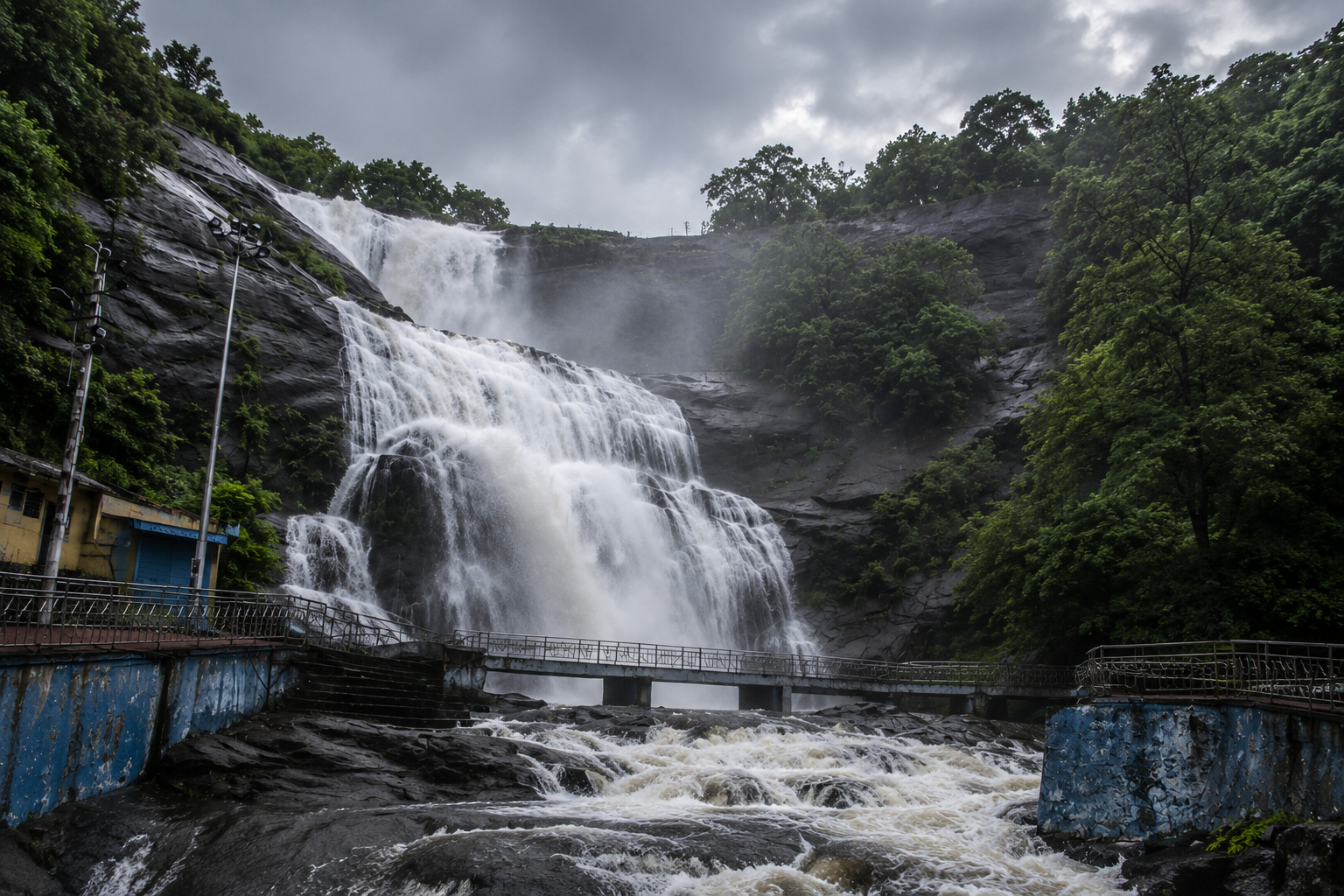
Courtallam, also called Kutralam, sits in the foothills of the Western Ghats in Tamil Nadu’s Tirunelveli district. Its tropical monsoon climate creates two sharply different experiences: the waterfall season, when the famous falls thunder with full force, and the dry season, when the town offers quiet exploration and comfortable temperatures. The best month to visit depends entirely on what you want. If the waterfalls are your priority, plan for August or September. If you want pleasant weather for sightseeing without battling crowds, December or January will serve you better. This guide breaks down every month so you can match your trip to the conditions that matter most to you.
Quick Decision Table: Which Month Fits Your Trip?
| Month | Avg High (°C) | Avg Low (°C) | Rainfall | Waterfall Flow | Crowd Level | Best For |
|---|---|---|---|---|---|---|
| January | 31 | 20 | Low | Trickling | Moderate | Sightseeing, trekking |
| February | 32 | 21 | Low | Trickling | Low | Sightseeing, temple visits |
| March | 34 | 23 | Very low | Dry | Low | Avoid unless you have no choice |
| April | 36 | 25 | Very low | Dry | Very low | Avoid |
| May | 35 | 24 | Low | Dry | Very low | Avoid |
| June | 32 | 23 | Moderate | Building up | Moderate | Early monsoon, fewer tourists |
| July | 30 | 23 | Heavy | Full force | Very high | Waterfalls, if you can handle crowds |
| August | 30 | 23 | Heavy | Full force | Very high | Waterfalls at absolute peak |
| September | 31 | 23 | Heavy | Full force | High | Waterfalls, slightly fewer crowds than August |
| October | 31 | 23 | Very heavy | Full force | Moderate | Waterfalls, but rain can disrupt plans |
| November | 31 | 22 | Heavy | Moderate to full | Low | Transition month, good compromise |
| December | 30 | 21 | Moderate | Moderate | Moderate | Best overall weather, decent waterfall flow |
The Four Seasons of Courtallam
Courtallam does not have four seasons in the temperate sense. Instead, the year breaks into three distinct periods that dictate everything about a visit.
Summer: March to May
Summer in Courtallam is punishing. Daytime temperatures regularly climb past 35°C, and the humidity makes it feel even worse. The waterfalls that define this town dry up almost completely by April. The Main Falls, which in August can drown out conversation from a hundred metres away, becomes a bare rock face with at most a faint trickle. The smaller falls like Chitraruvi and Shenbaga Devi Falls often stop flowing entirely.
There is one reason to visit during summer: you want the town to yourself. Tourist numbers drop to nearly zero. Hotels offer their lowest rates. The temple at the centre of town remains open, and the surrounding hills still offer shade if you walk early in the morning. But the experience is fundamentally different from what Courtallam is known for. Most regular visitors would advise skipping these months entirely.
Southwest Monsoon: June to September
This is Courtallam’s defining season. The southwest monsoon hits the Western Ghats head-on, and Courtallam sits in the path of some of the heaviest rainfall in Tamil Nadu. The waterfalls begin to stir in June, reach full force by July, and stay at peak through August and September.
The atmosphere during these months is electric. The sound of water is constant. Mist hangs in the air. The vegetation turns a deep, saturated green. The falls themselves are spectacular: the Peraruvi (Main Falls) cascades with enough force to soak anyone standing fifty metres away. The Five Falls area becomes a series of roaring curtains of water.
But this comes with trade-offs. The crowds on weekends from July to September are enormous. Local families, tourists from across Tamil Nadu, and visitors from Kerala all converge on the falls. The main bathing areas get packed. Parking becomes difficult. The roads leading into town can be slippery and slow.
The rain itself is not constant. It tends to come in bursts: heavy downpours that last an hour or two, followed by clearing skies. But it can also rain steadily for days. Umbrellas and raincoats are essential. Slippery rocks around the falls are a genuine hazard. Every year, visitors injure themselves by climbing on wet surfaces.
Northeast Monsoon and Winter: October to February
October and November bring the northeast monsoon, which delivers the heaviest rainfall of the entire year. The waterfalls remain full, but the rain can be relentless. October is the wettest month in Courtallam. Roads sometimes flood. Landslides occasionally block the mountain routes. This is not the ideal time for a first-time visitor.
December marks the turning point. The rain eases significantly. The skies clear more often. Temperatures drop to the most comfortable range of the year: highs around 30°C, lows around 21°C. The waterfalls still have good flow from the monsoon buildup, though not at the explosive levels of August.
January and February are the sweet spot for visitors who want pleasant weather without the monsoon chaos. The days are warm but not hot. The nights are cool enough that a light sweater feels good. The waterfalls are reduced to a moderate flow, but they still run. The crowds are manageable. This is the best time for exploring the town itself, visiting the temples, and taking short treks into the surrounding hills.
Monthly Breakdown: What Each Month Actually Feels Like
January
January offers the most comfortable weather of the year. The air is dry. The sun is strong but not oppressive. Morning walks through the town are genuinely pleasant. The waterfalls are flowing at perhaps a third of their monsoon peak, but they still put on a good show. The Five Falls area is particularly nice this month because the reduced water levels make the pools safer for wading.
The downside: the famous experience of bathing under the full force of the Main Falls is less dramatic. If you want the iconic Courtallam waterfall experience, January will disappoint. If you want a relaxed hill station visit with waterfalls as a backdrop, January is perfect.
February
Very similar to January, but slightly warmer. The days edge toward 32°C. The waterfalls continue to recede. This is a good month for temple tourism. The Courtallam temple complex, dedicated to Shiva, sees fewer crowds, and the architecture deserves unhurried attention. The surrounding hills are green and pleasant for walking.
March
The heat becomes noticeable. The waterfalls are now reduced to a trickle in most places. The Main Falls may still have a thin sheet of water, but the smaller falls are dry. Local businesses start their off-season schedule. Some smaller hotels and eateries close for maintenance. The town feels quiet, almost sleepy. Only visit in March if you are passing through and have no flexibility.
April
The hottest month. Daytime temperatures can hit 38°C in the shade. The waterfalls are completely dry except for the deepest pools that retain some water. The town empties of tourists. The experience is not Courtallam as it is known. Avoid April.
May
The heat continues, though the first signs of the approaching monsoon appear in the last week. The humidity rises. The sky gets hazy. A few early showers may arrive, but they are brief and do little to cool things down. The waterfalls remain dry. Still a month to avoid.
June
The monsoon arrives. The first heavy rains typically start in the second or third week. The waterfalls begin to show signs of life. A trickle becomes a stream. By the end of June, the Main Falls is flowing again, though not yet at full power. The crowds are still light. This is a good month for visitors who want to see the waterfalls without the July-August crush. The rain is unpredictable, so pack accordingly. Roads can be muddy. The landscape transforms from brown to green in a matter of days.
July
The waterfalls hit full force. The Main Falls is spectacular. The roar of the water is audible from the town centre. The mist from the falls keeps the surrounding area cool and damp. This is peak tourist season. Weekends are chaotic. The bathing areas under the falls are packed shoulder to shoulder. If you visit in July, go on a weekday if possible. Arrive early in the morning, before 8 am, to get parking and find a spot at the falls with reasonable space.
The rain is heavy but comes in patterns. Mornings are often clearer. Afternoon downpours are common. Evening rain is hit or miss. Plan your falls visit for the morning.
August
Essentially the same as July, but the waterfalls are at their absolute peak. The water volume is maximum. The force of the Main Falls is genuinely impressive. The Five Falls area is fully active. This is the month that matches the postcard image of Courtallam.
The crowds are also at their peak. The town’s population swells dramatically on weekends. Traffic jams on the approach roads are common. Hotels book up weeks in advance. If you plan an August visit, book accommodation at least a month ahead. Expect noise, queues, and packed bathing areas. The experience is worth it for the waterfalls, but it is not a relaxing getaway.
September
The southwest monsoon begins to taper off. The waterfalls remain at full force through most of the month. The rain becomes less reliable: some days are clear and warm, others bring heavy downpours. The crowds thin out slightly as the school holidays end. September offers the best balance of waterfall spectacle and manageable crowd levels.
The water in the falls is still cold and powerful. The vegetation is at its greenest. The air smells of wet earth and leaves. This is the month many regular visitors prefer over August.
October
The northeast monsoon arrives. This is the wettest month. The rain is heavier and more persistent than in July or August. It can rain continuously for two or three days. The waterfalls stay full, but getting to them becomes a challenge. Roads can flood. The main bathing areas get slippery and muddy.
October is for experienced monsoon travellers who know how to handle constant rain. First-time visitors should probably choose another month. If you do come in October, bring proper waterproof gear, not just an umbrella. Expect some activities to be cancelled by weather.
November
The transition month. The northeast monsoon starts to weaken. The first half of November is still very wet. The second half sees more clear days. The waterfalls are still flowing well from the monsoon buildup. The temperature drops to comfortable levels. The crowds are low because most tourists think the season is over.
November is a hidden gem for visitors who want decent waterfalls without the crowds. The risk of rain is real but manageable. The town is quiet. Hotels are easy to book. The experience feels more authentic and less commercial.
December
The best overall weather month. The rain has largely stopped. The skies are clear more often than not. The temperature is perfect: warm enough for light clothing during the day, cool enough in the evening to need a light jacket. The waterfalls are still flowing at moderate levels. The crowds are moderate, heavier on weekends but nothing like July and August.
December is the month for the complete Courtallam experience. You can visit the waterfalls in the morning, explore the town in the afternoon, and sit outside in the evening without being soaked by rain or baked by heat. The waterfalls may not be at their most dramatic, but they are still impressive. For most visitors, December offers the best all-round experience.
Crowd Calendar: When to Expect Company
Courtallam’s crowd levels follow a predictable pattern that many guides overlook. Here is the real picture:
Peak crowds (July to September): Weekends are overwhelming. The main bathing areas under the falls can have hundreds of people at once. Parking fills by 9 am. Local buses arrive packed. The atmosphere is festive but chaotic. Weekdays are much better, with perhaps half the crowd.
Moderate crowds (December to February): Weekends are busy but manageable. Weekdays are quiet. The falls area never feels empty, but you can find space. The town itself is pleasant.
Low crowds (March to May): Almost no tourists. The town feels empty. Some facilities close. The experience is peaceful but the waterfalls are dry.
Very low crowds (October to November): The rain keeps most tourists away. The town is quiet. This is the best time for solitude, if you can handle the weather.

What to Pack: Month-by-Month Guide
Packing wrong for Courtallam can ruin a trip. The climate shifts dramatically, and the wrong gear makes the difference between a great experience and a miserable one.
June to September (monsoon peak): Waterproof shoes are essential. The paths around the falls are constantly wet and slippery. Normal trainers will be soaked within minutes. Bring a proper raincoat, not just an umbrella, because the mist from the falls gets everywhere. Quick-dry clothing is useful. Insect repellent is necessary, the mosquitoes are active after rain. A dry bag or waterproof phone case protects valuables at the falls. Avoid jeans, they take forever to dry.
October to November (heavy rain): The same gear as monsoon peak, but add a backup pair of shoes. The rain is heavier and more persistent. Waterproof bags for clothing are a good idea. A torch or headlamp helps if power cuts occur during storms.
December to February (pleasant weather): Light cotton clothing for daytime. A light sweater or jacket for evenings. Comfortable walking shoes. Sunscreen and sunglasses. The sun is still strong even when the temperature is comfortable. An umbrella is useful but not essential.
March to May (hot and dry): Light cotton clothing. A wide hat. Sunscreen. A water bottle, dehydration is a real risk. The waterfalls are dry, so swimming gear is unnecessary. Evening wear can be light, the nights are warm.
Common Mistakes Visitors Make
Going to the falls at midday in July. The crowds peak around 11 am to 3 pm. Go at 7 am or after 4 pm for a better experience.
Wearing flip-flops to the falls. The rocks are slippery. The current can be stronger than it looks. Proper water shoes with grip are much safer.
Assuming the waterfalls will be impressive in May. They will not be. Check the month before booking.
Not booking accommodation in advance for August. Hotels fill up weeks ahead. Walk-in rates are high and availability is low.
Driving a regular car up the mountain roads in monsoon. The roads get slippery. Some stretches become difficult for low-clearance vehicles. A vehicle with good ground clearance is recommended.
Expecting a quiet spa experience in August. Courtallam in peak season is loud, crowded, and energetic. It is not a peaceful retreat. Adjust expectations accordingly.
Safety During Monsoon
The waterfalls are the main attraction, but they are also the main danger. Every year, visitors slip on wet rocks, get caught in currents, or injure themselves climbing on unsafe surfaces. The rocks around the falls are covered in algae and become extremely slippery when wet. Do not climb on them. Stay within the designated bathing areas. Do not swim in areas marked as dangerous. The current near the base of the Main Falls is stronger than it appears.
Flash floods are a real risk during heavy rain. If the water level rises suddenly, move away from the falls and streams immediately. Local authorities sometimes close the falls during extreme weather. Respect these closures.
The Verdict: When Should You Go?
The answer depends on your priorities, but here is a straightforward breakdown:
For the waterfalls at their absolute best: Go in August. Accept that it will be crowded, especially on weekends. Book everything well in advance.
For a good balance of waterfalls and comfort: Go in September or December. September has better waterfalls, December has better weather. Both have manageable crowds.
For sightseeing and relaxation: Go in January or February. The weather is perfect. The town is quiet. The waterfalls are modest but still present.
For avoiding crowds at any cost: Go in November. The rain is a risk, but the town is nearly empty and the waterfalls are still flowing.
Do not go: March, April, or May, unless you have no other option. The waterfalls are dry, the heat is oppressive, and the experience does not represent what Courtallam is known for.