
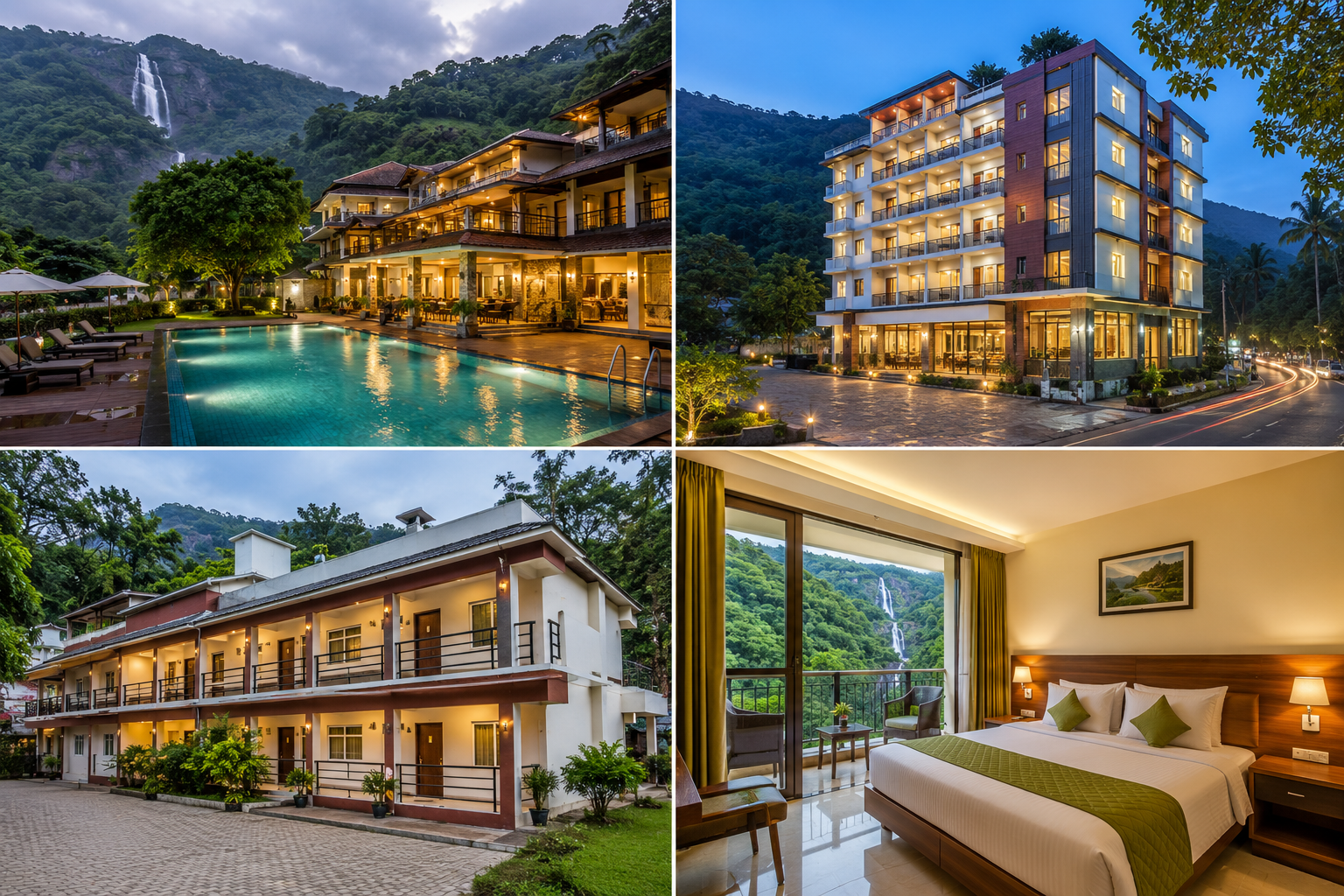
Courtallam, also known as Kutralam, is a waterfall town in Tamil Nadu’s Tenkasi district that draws visitors year-round for its therapeutic waters and lush Western Ghats setting. Finding a genuinely good hotel here depends less on star ratings and more on timing, location, and your tolerance for crowds. The best places to stay in Courtallam range from basic lodges near the main falls to private resorts with their own waterfall access, and the right choice changes completely depending on whether you visit during peak season (June-September) or the quieter months.
Quick Guide: Courtallam Hotels by Type
Private waterfall resorts – Best for couples and families wanting privacy; limited availability, book months ahead for peak season. Located away from the main town.
Mid-range hotels near Main Falls – Convenient for first-time visitors; walking distance to the main waterfall and temple. Noisy on weekends and during festival periods.
Budget lodges in Old Courtallam – Cheapest option; close to Five Falls area. Basic amenities, variable cleanliness. Suitable for backpackers and pilgrim groups.
Heritage bungalows and guesthouses – Scattered in quieter pockets like Shenbagadevi. Limited inventory, often run by private owners or temple trusts.
The Two Courtallams: Choosing Your Base
Courtallam splits into two distinct areas, and picking the wrong one can ruin a trip.
Main Falls area (Upper Courtallam) is where most hotels cluster. It is chaotic during peak season – narrow roads clogged with cars, constant noise from tour groups, and vendors selling everything from fried snacks to plastic raincoats. The upside is proximity: the main waterfall, the famous temple, and the bus stand are all within a ten-minute walk. If you are visiting for a day or two and want the classic Courtallam experience, stay here. Hotels in this zone tend to be older, with basic rooms and shared dining.
Old Courtallam (Lower Courtallam) sits about two kilometres downhill. It is noticeably calmer, with wider roads and more space between buildings. The Five Falls area and smaller cascades like Shenbagadevi Falls are closer from here. Several newer resorts have opened in this stretch, offering better amenities and more greenery. The trade-off is that you will need auto-rickshaws or your own vehicle to reach the main falls, and evening options for food are limited.
For a family with children or anyone seeking rest, Old Courtallam is the better base. For solo travellers and pilgrims who plan to spend most of their time at the main temple and falls, Upper Courtallam works fine.
Private Waterfall Resorts: Worth the Premium?
Several resorts in and around Courtallam advertise private waterfalls – meaning a small cascade within the property grounds or a stream running through the premises. These are not the thundering main falls but rather gentle, pool-like settings where guests can bathe without the crowds.
The experience is genuinely different. At the main falls, you are one of hundreds standing under the water, jostling for space. At a private resort, you have the water to yourself, often in a landscaped garden with seating. For many visitors, especially couples and older travellers, this alone justifies the higher cost.
However, “private waterfall” is not a regulated term. Some properties have a natural stream that qualifies as a waterfall only during heavy rain. Others have built concrete pools fed by diverted stream water. Before booking, ask specific questions: Is the waterfall natural or man-made? Does it flow year-round or only during monsoon? Is the water depth safe for children? Reputable resorts will answer honestly. Those that dodge the question are best avoided.
Availability is tightest between July and September, when the falls are at full flow. Book at least two to three months ahead for weekends.
Mid-Range Hotels: The Reliable Options
The middle tier in Courtallam is crowded but inconsistent. A handful of hotels consistently get good feedback from travellers.
Properties near the main bus stand offer the easiest access for those arriving by public transport. Rooms are functional – clean beds, attached bathrooms, ceiling fans or air conditioning depending on the room tier. Most have in-house restaurants serving basic South Indian meals. The main complaint across this category is noise. Thin walls, early morning temple bells, and street traffic mean light sleepers should bring earplugs.
Hotels on the road to Five Falls tend to be quieter and slightly newer. Some have small gardens or sit-out areas. A few offer family rooms with multiple beds, which are practical for groups. Parking is available at most, but spaces fill quickly on weekends.
One recurring issue in mid-range hotels is water supply. Courtallam depends on monsoon rains and groundwater, and during dry spells (February-May), some hotels ration water or restrict bathing hours. Always confirm water availability when booking, especially if travelling in summer.
Budget Lodges and Dharamshalas
Courtallam has dozens of budget lodges catering to pilgrims and short-stay visitors. Most are concentrated in Upper Courtallam, within a few hundred metres of the main temple. Rooms are basic: a cot, a fan, a shared or attached toilet. Some lodges charge by the hour for day-use rooms, which is common among visitors who only want to bathe and rest before heading home.
Cleanliness varies enormously. Some lodges maintain decent standards because they turn over rooms quickly. Others show signs of neglect – stained bedding, mould in bathrooms, unreliable hot water. Reading recent reviews is essential here, as a lodge that was fine six months ago may have deteriorated.
Temple-run dharamshalas (pilgrim guesthouses) offer the cheapest stays. Rooms are spartan but clean, and the money goes towards temple maintenance. Booking is usually done in person, and availability is first-come, first-served. These are best for solo pilgrims who do not mind basic conditions.
What to Expect in 2025 and 2026
Courtallam’s infrastructure has been under strain for years, and confirm the pattern continues. Roads in the main falls area are narrow and poorly maintained. During peak season, traffic jams stretch for kilometres. Parking is a genuine problem – many hotels have no dedicated parking, and street parking is chaotic. Visitors driving their own cars should plan to arrive early in the day and avoid moving the vehicle until departure.
Sanitation is another concern. The town panchayat has deployed additional sanitary workers from neighbouring local bodies to manage the seasonal surge, but public toilets near the falls remain overcrowded and poorly maintained. Most hotels advise guests to use their room facilities before heading to the waterfalls.
Night-time access is technically allowed, but with caveats. The main waterfall area is not officially closed after dark, but lighting is poor, and police occasionally restrict access during late hours for safety reasons. Most hotels recommend returning to your room by 9 or 10 PM. For night bathing, some resorts with private falls allow it within their premises, but the main falls are not suitable after sunset.
Common Mistakes Travellers Make
Booking during the first week of the season. June and early July see the worst crowding and the most infrastructure problems. Roads are at their worst, water supply is inconsistent, and hotels are overbooked. Mid-August to September is smoother.
Assuming all hotels have hot water. Many budget and mid-range properties rely on solar heating, which fails on cloudy days. During monsoon season, cold showers are common. Confirm whether the hotel has electric backup.
Not checking for mosquito protection. Courtallam is surrounded by forest and standing water. Mosquitoes are active year-round, especially after dusk. Hotels without mosquito nets or repellent devices can make nights miserable.
Ignoring the day-trip crowd pattern. Courtallam empties out around 5 PM when day-trippers leave. Evenings are peaceful, and the falls are less crowded. Plan your waterfall visits for late afternoon rather than morning.
Practical Tips for a Smooth Stay
- Book directly with the hotel rather than through third-party sites. Many Courtallam hotels offer better rates for direct bookings and are more responsive to special requests.
- Carry cash. Smaller lodges and local eateries do not accept cards. ATMs are available in town but often run out of cash on weekends.
- Bring your own toiletries, towels, and toilet paper. Even mid-range hotels sometimes provide only the bare minimum.
- Pack light woollen clothes or a shawl. Courtallam can get surprisingly cool in the evenings, especially during and after rain.
- If driving, arrive before noon. Afternoon traffic into town is heavy, and finding parking becomes difficult.
- For families with young children, choose a hotel with a pool or private bathing area. The main falls are powerful and can be overwhelming for small kids.
Making the Final Choice
The best hotel in Courtallam is the one that matches your priorities. If the main attraction is the waterfall itself and you want convenience over comfort, pick a mid-range hotel in Upper Courtallam within walking distance of the falls. If peace and privacy matter more, head to Old Courtallam or book a private waterfall resort. If you are on a pilgrimage and budget is the only concern, the lodges near the temple will serve.
Check recent traveller reviews on multiple platforms, not just one. Look for patterns: repeated complaints about water, noise, or cleanliness are red flags. Praise that sounds generic may be unreliable. Photos posted by guests are more honest than professional hotel photography.
Courtallam rewards those who plan ahead and adjust expectations. It is not a luxury destination, and no hotel can fix the town’s infrastructure problems. But with the right choice of accommodation, the waterfalls remain one of South India’s most refreshing getaways.